
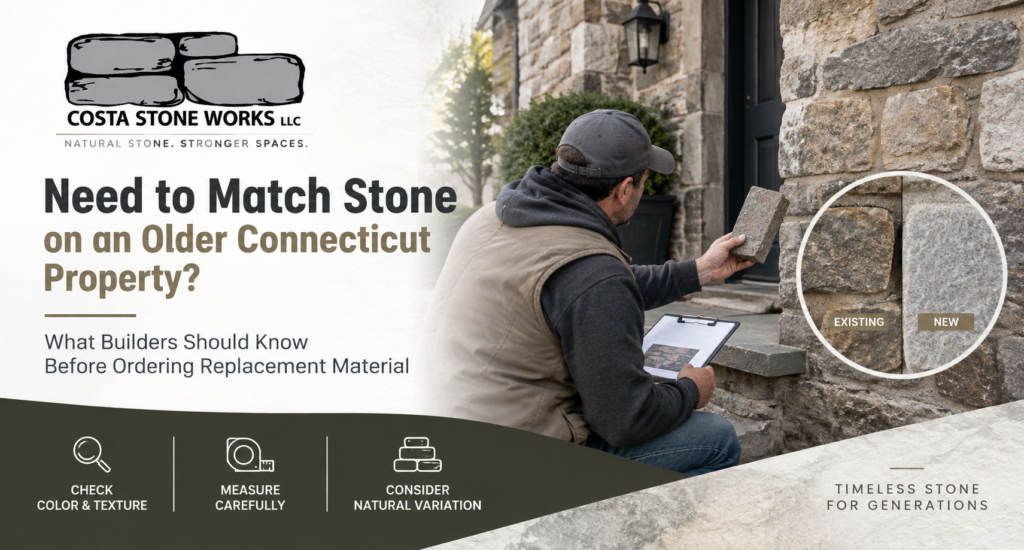
Renovating or repairing an older Connecticut property often comes with a challenge that is easy to underestimate: finding new stone that works with the material already in place. A damaged step may need replacing, a stone wall may need rebuilding, or an addition may need to blend with an existing structure that has been standing for decades.
Matching older stone is rarely as simple as choosing the same general color. Natural stone changes in appearance over time, and older properties may contain materials with sizes, textures, finishes, and weathering patterns that are difficult to reproduce exactly. For builders, understanding these differences before ordering replacement material can help create a more natural-looking finished project.
Start With More Than Just the Stone Color
Color is usually the first thing people notice, but it should not be the only factor considered when matching existing stone.
Two stones may both appear gray, for example, but one may contain warmer brown tones while another has blue or green undertones. Natural variation can also create noticeable differences from one piece to another.
Texture, grain, veining, edge characteristics, and surface finish can be equally important. When evaluating replacement material, builders should look at the complete appearance of the existing stone rather than trying to match a single color from a photograph.
Working with an experienced stone supply company for contractors in New Haven can help contractors explore available materials while considering the practical requirements of the project.
Understand How Weathering Changes Stone
Stone that has been outdoors for 30, 50, or even 100 years will rarely look exactly as it did when first installed.
Rain, snow, sunlight, freeze-thaw cycles, foot traffic, dirt, biological growth, and routine use can gradually change its appearance. Edges may become softer, surfaces may become smoother or rougher, and colors may appear different from newly cut material.
This means a new piece of the same or similar stone may initially stand out. Builders should consider how fresh material will look next to weathered stone and whether reclaimed material may be appropriate for a particular restoration.
Measure Existing Stone Carefully
Appearance is only part of the matching process. Dimensions matter too.
Older stonework may contain pieces that do not match today’s common stock sizes. Steps, caps, curbing, wall stone, pavers, and other elements may have been cut or installed specifically for the property.
Before ordering, measure length, width, thickness, joint spacing, and other relevant dimensions. For irregular pieces, photographs and templates may also help communicate what is needed.
Wholesale natural stone for builders Connecticut projects can involve larger quantities, making accurate measurements particularly important before materials are ordered for an extensive repair, addition, or restoration.
Pay Attention to the Surface Finish
The way stone is finished can significantly affect how it looks.
A smooth surface can reflect light differently from a rough or textured one, even when both pieces come from similar material. Existing stone may have been split, cut, thermal-finished, worn naturally, or treated using another method.
Look closely at the surface from different angles and in different lighting conditions. A replacement stone with a similar color but noticeably different finish can still appear out of place once installed.
Consider Reclaimed Stone for Older Properties
For some historic or older properties, reclaimed stone may be worth considering.
Reclaimed materials have already experienced years of exposure and may offer weathered surfaces, older dimensions, or visual characteristics that work naturally with an existing structure. Reclaimed cobblestones, granite curbing, and other stone products can sometimes provide an aesthetic that newly produced material cannot immediately replicate.
However, reclaimed does not automatically mean “perfect match.” Pieces still need to be evaluated for size, condition, color, texture, and suitability for the intended application.
Bring Good Reference Information to Your Supplier
Builders can make the selection process easier by collecting useful information before sourcing replacement material.
Clear photographs should show the stone both close up and from farther away. Include images taken in natural daylight when possible. Record dimensions and note where the material is being used, such as a walkway, wall, step, patio, building facade, or landscape feature.
If a loose sample of the existing material is legitimately available from the project, it can be especially useful for comparison. Costa Stone Works supplies natural and reclaimed stone and provides custom stone fabrication, giving builders different options when a project requires more than a standard stock product.
Order With Natural Variation in Mind
Even after finding a close match, remember that natural stone is naturally variable.
Individual pieces may contain differences in shade, markings, texture, and pattern. Builders should review material with the overall installation in mind rather than expecting every stone to look identical.
For larger projects, planning the required quantity in advance can also be helpful. Running short and ordering additional material later may make visual consistency more challenging if the available material comes from a different batch or source.
Sometimes Blending Works Better Than an Exact Match
An exact match may not always be realistic, especially on a very old property.
In these situations, the goal can shift from making every piece identical to creating a finished installation that looks intentional. Carefully blending replacement pieces throughout an area, rather than concentrating visibly different stone in one location, may help create a more balanced appearance when appropriate for the project.
Final Thoughts
Matching stone on an older Connecticut property requires more than finding a similar color. Builders should consider the original material’s dimensions, texture, finish, weathering, natural variation, and surrounding stonework before placing an order.
Good photographs, accurate measurements, physical samples when available, and early material planning can make the sourcing process easier. Reclaimed stone and custom fabrication may also provide additional options for projects where standard materials do not fit the existing character.
The goal is not always to find a replacement stone that looks perfectly identical on day one. It is to choose material that works visually and practically with the property so the repair or addition feels like a thoughtful part of the original structure.