
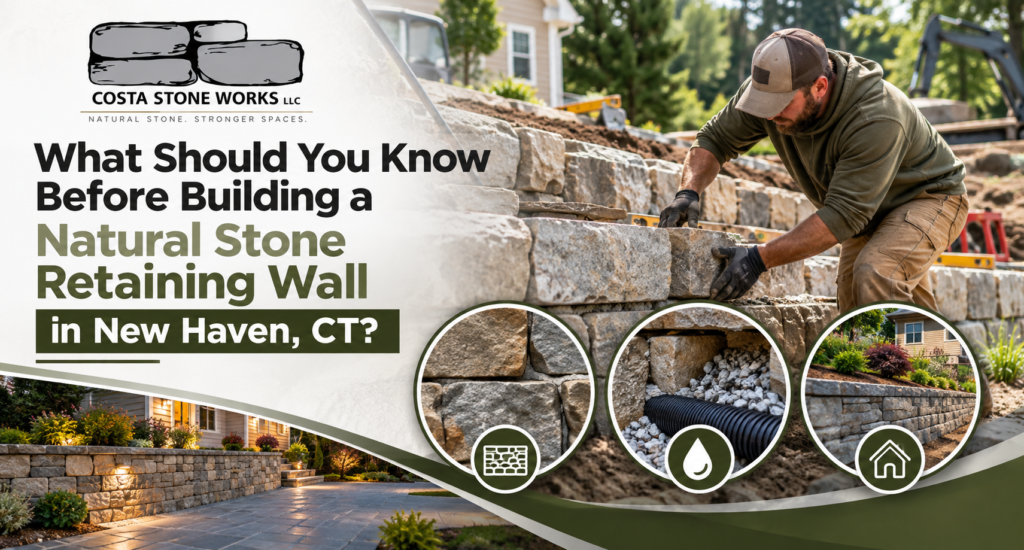
A retaining wall can do more than add structure and visual appeal to a landscape. It can help manage changes in elevation, define outdoor spaces, and support soil on sloped areas. Natural stone is a popular choice because it can create a more natural appearance while complementing other landscape materials.
However, building a stone retaining wall is not simply a matter of stacking stones. Proper planning, drainage, materials, and installation all play important roles in how well the wall performs over time. For homeowners, builders, and landscape contractors in New Haven, CT, understanding these basics can help before starting a retaining wall project.
What Is a Retaining Wall?
A retaining wall is a structure designed to hold soil in place where there is a change in ground elevation. Without proper support, soil on a slope can gradually move downhill, particularly after heavy rain or changes in ground conditions.
Retaining walls can be used around gardens, patios, driveways, walkways, and other outdoor areas. The size and construction method depend on the height of the wall, soil conditions, drainage, and the amount of pressure the wall needs to withstand.
Why Choose Natural Stone?
Natural stone can provide a durable and distinctive appearance for a landscape. Unlike manufactured materials that are designed to look uniform, natural stone can have variations in color, texture, shape, and surface characteristics.
These variations can give a retaining wall a more natural appearance and help it blend with the surrounding landscape.
Homeowners and contractors looking for materials can explore wholesale natural stone for builders in Connecticut to learn more about natural stone options available for construction and landscaping projects.
Start With Proper Planning
Before ordering materials, consider the location, wall height, length, slope, and purpose of the retaining wall.
Think about what will be located above the wall. A wall supporting a garden may experience different loads than one located below a driveway or other heavily used area.
The surrounding landscape should also be considered. Existing trees, structures, utility lines, drainage patterns, and property boundaries can all affect the project.
For larger or more complex retaining walls, consulting an appropriately qualified professional may be necessary to determine the appropriate design and construction requirements.
Drainage Is Extremely Important
Water is one of the major considerations when building a retaining wall. Soil can become heavier when saturated, increasing pressure against the wall.
Without proper drainage, water may collect behind the wall instead of moving away from it. Over time, this can contribute to movement, cracking, bulging, or other problems.
Drainage should therefore be considered during the planning stage rather than treated as an afterthought. The appropriate drainage approach depends on the site, wall design, soil, and local conditions.
Prepare a Stable Base
A retaining wall needs a stable foundation. Placing stones directly on loose soil may not provide the support required for a long-lasting structure.
The base typically needs to be properly prepared and compacted before the stone is placed. The exact preparation depends on the wall design and site conditions.
A level and stable base can help distribute the weight of the wall and reduce the chance of unwanted movement.
Select the Right Stone
Not every type or size of stone is suitable for every retaining wall. Material selection should take into account the wall’s design, size, intended use, and installation method.
Some projects may call for larger wall stone, while others may use smaller pieces as part of a particular construction approach.
Natural stone can also vary considerably from one piece to another. Contractors should account for these variations when planning the layout and estimating the amount of material needed.
Think About the Connecticut Climate
New Haven experiences seasonal changes that can affect outdoor construction. Freezing temperatures, thawing, rainfall, and changing soil moisture can all influence a retaining wall over time.
This makes proper drainage, foundation preparation, and appropriate material selection particularly important.
A wall that looks stable when first installed still needs to be designed with long-term environmental conditions in mind.
Consider the Wall’s Surroundings
A retaining wall should work with the rest of the landscape rather than look like an isolated feature.
Consider how the stone will relate to nearby patios, walkways, steps, planting areas, fencing, and the home’s exterior. Choosing materials that complement the existing property can create a more cohesive outdoor space.
Natural variations in stone can also be used to create visual interest without making the wall look overly manufactured.
Work With the Right Stone Supplier
Material quality and availability can affect the planning process. Contractors should know the required stone type, approximate quantity, preferred finish, and delivery requirements before placing an order.
A reliable supplier can also help contractors understand available material options and coordinate delivery based on project requirements.
For contractors working on projects in the area, a stone supply company for contractors in New Haven can provide access to stone materials for different construction and landscaping applications.
Estimate the Right Amount of Material
Ordering too little stone can delay a project, while ordering significantly more than necessary can create additional storage and handling concerns.
Measurements should be taken carefully before ordering. The wall’s length, height, thickness, stone dimensions, and construction method all influence the amount of material required.
It is also useful to account for natural variations in stone sizes and shapes when estimating quantities.
Consider Professional Installation
A retaining wall involves more than appearance. Its construction needs to account for soil pressure, drainage, foundation stability, and the conditions around the property.
For a simple landscaping feature, the installation requirements may differ from those of a taller or more structurally demanding wall. When the project is complex, professional design or installation guidance can help address site-specific requirements.
Plan the Project Before Buying Materials
A natural stone retaining wall can become an attractive and functional part of a New Haven landscape, but good results begin before the first stone is placed.
Homeowners and contractors should consider the wall’s purpose, site conditions, drainage, foundation, stone selection, climate, and surrounding landscape. Taking these factors into account can help reduce avoidable problems and create a wall that fits the property.
Costa Stone Works supplies natural and reclaimed stone and works with homeowners, contractors, builders, architects, and other professionals on stone projects.
The key is to treat the retaining wall as both a landscape feature and a structure. With careful planning and the right materials, natural stone can provide a practical way to manage slopes while adding character to an outdoor space in New Haven, CT.